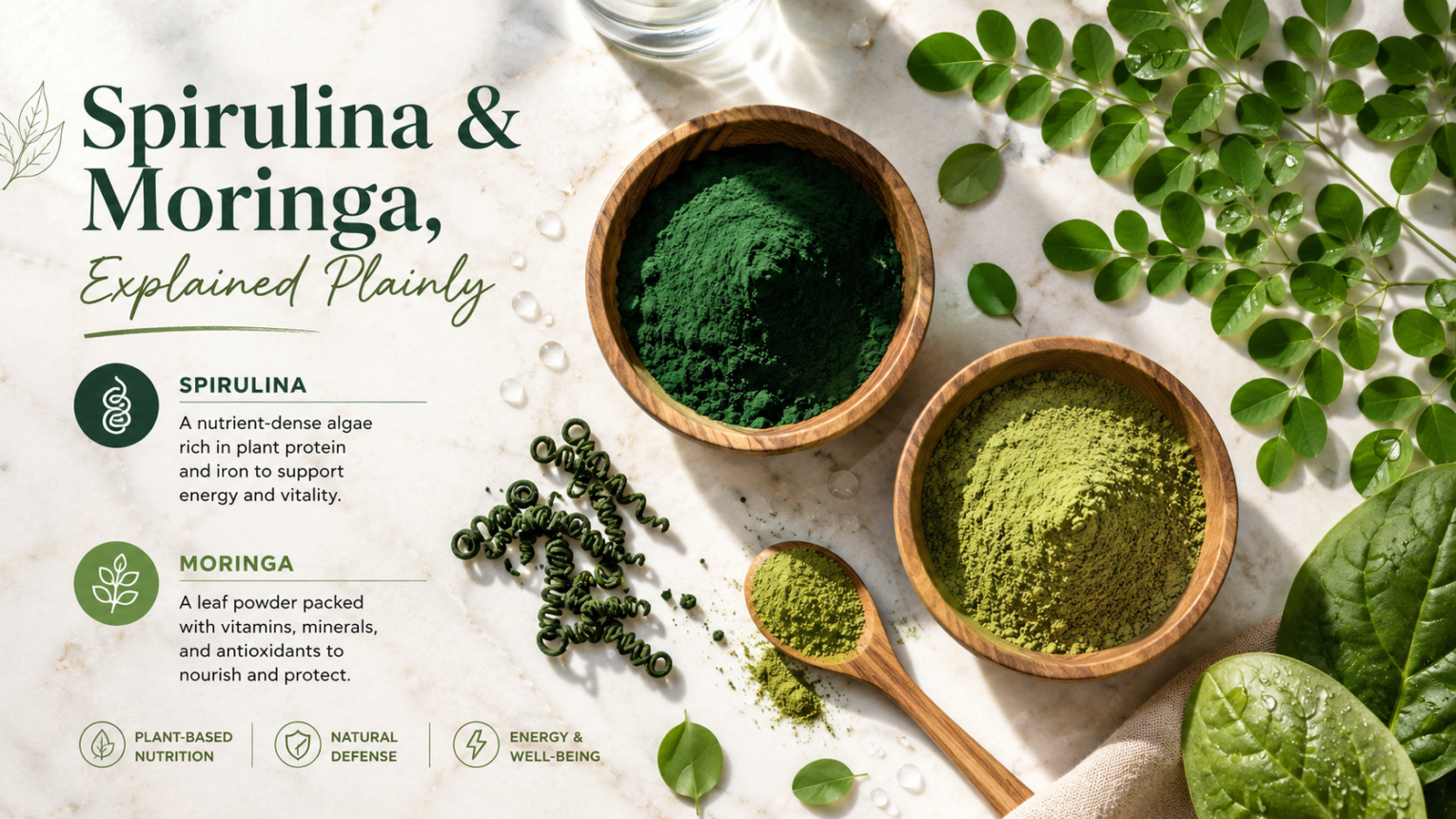
These green powders have become wellness favorites. But what do they actually do—and what claims are pure marketing?
SEO focus: spirulina moringa benefits
What Is Spirulina?
Spirulina is a blue-green algae (cyanobacteria) that grows in freshwater. It's been harvested for centuries—the Aztecs used it, NASA studied it for space missions, and today it's one of the most nutrient-dense foods per gram.
What You Actually Get:
- Protein: 65-70% of dry weight (more than any plant source)
- Vitamin B12: Complete amino acid profile, unlike most plant proteins
- Iron: 10x more bioavailable iron than spinach
- Phycocyanin: An antioxidant unique to spirulina
What It Does:
Spirulina doesn't perform miracles. What it does: supports energy production, reduces recovery time after exercise, and helps with anemia (particularly in India where iron deficiency is common). Studies show consistent benefits for athletes and people with chronic fatigue.
What It Doesn't Do:
It won't "detox" your liver (your liver does that). It won't "reverse aging" or "cure disease." Phycocyanin is an antioxidant, but so are apples and almonds.
What Is Moringa?
Moringa (drumstick tree) is native to India and valued in Ayurveda for millennia. Every part—leaves, seeds, roots, pods—is used.
What You Actually Get:
- Calcium: 4x more than milk (important for Indian diets with varied dairy intake)
- Vitamin C: 7x more than oranges
- Potassium: 3x more than bananas
- Complete proteins: All 9 essential amino acids
What It Does:
Moringa's real strength is nutrition density. A teaspoon of moringa powder delivers what a full meal of leafy greens provides. For people with poor appetite, nutrient gaps, or pregnancy-related needs, it bridges nutritional deficiencies effectively.
The Ayurvedic application—fighting inflammation—has real science: moringa contains isothiocyanates, which reduce inflammatory markers in blood work.
What It Doesn't Do:
It won't "cure diabetes" on its own. It supports stable blood sugar when combined with diet changes, but it's not replacement medicine.
Spirulina vs. Moringa: Which One?
Choose Spirulina if:
- You need protein support (athletes, vegetarians)
- You're managing fatigue or energy levels
- You want B12 support (especially for vegan diets)
Choose Moringa if:
- You have nutritional gaps (pregnancy, poor appetite)
- You want broader micronutrient coverage
- You're addressing inflammation (arthritis, chronic pain)
Real Talk: Most people benefit from cycling through both. Spirulina for 2-3 months, then moringa for 2-3 months, gives you coverage without habituation.
How to Use Them
Spirulina Powder (100g):
- 1/2 teaspoon daily in smoothies (it's strong-flavored)
- Mix with lemon juice and water (more palatable)
- Add to breakfast pancakes or yogurt
- Best on empty stomach for absorption
Moringa Powder:
- 1 teaspoon daily in tea, water, or food
- Less intense flavor than spirulina
- Can be added to curries without changing taste significantly
- Better with food (fat increases nutrient absorption)
Quality Matters
Not all spirulina and moringa are equal. Look for:
- Organic certification (algae absorbs everything from water, including pollutants)
- Third-party testing (ensures heavy metal testing)
- Freeze-dried (not heat-treated, preserves nutrients)
Valar sources both from certified farms in India with heavy metal testing in every batch. This isn't marketing—it's accountability.
Leave a Reply
You must be logged in to post a comment.